
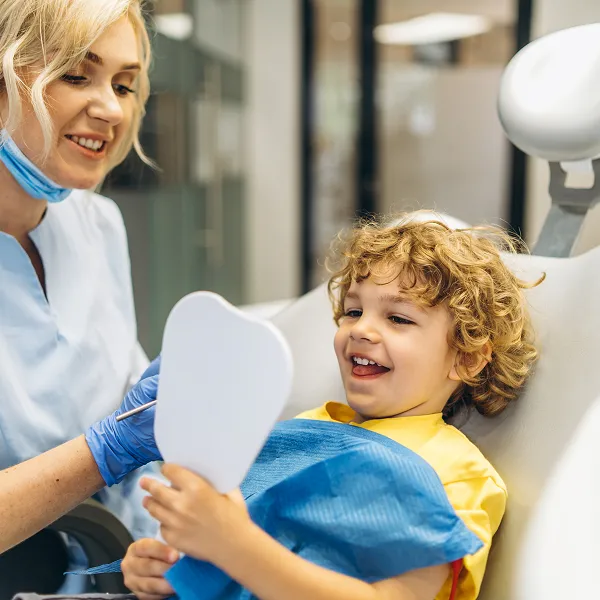
When should kids start brushing their teeth on their own? Most children develop the coordination to brush independently between ages 6 and 8, but readiness varies from child to child. The American Academy of Pediatric Dentistry (AAPD) recommends that families supervise brushing until around this age range because younger children typically lack the fine motor skills needed to clean all tooth surfaces effectively. At Pediatric Dental Group of New York, this is one of the most common questions families ask our team.
Teaching your child to brush their teeth independently is one of those milestones that brings up a lot of questions. When is too soon? When is too late? And how do you know if they’re actually doing a good job?
Think of it this way: if your child struggles to tie their shoes or write their name clearly, they probably aren’t ready to handle a toothbrush on their own yet. The same hand-wrist coordination required for those tasks applies to proper brushing technique.
Your child’s pediatric dentist can assess individual readiness during routine visits. Some kids are ready at 6. Others need guidance until 8 or beyond. There’s no one-size-fits-all answer, and that’s perfectly fine.
How Children Develop Independent Brushing Skills: A Stage-by-Stage Guide
Here’s what to expect at each age:
Infants (0-1 Year)
Before teeth even appear, you can gently wipe your baby’s gums with a soft, damp cloth after feedings. Once that first tooth pokes through, switch to an infant-sized toothbrush with soft bristles. You’re doing all the work at this stage, and that’s exactly how it should be.
Toddlers (2-3 Years)
Introduce a smear of fluoride toothpaste, about the size of a grain of rice. Your toddler might want to hold the brush, which is great for building interest. But you’re still the one doing the actual brushing. Let them “practice” on their own after you’ve finished.
Preschool (4-5 Years)
Children can grip the toothbrush and make brushing motions at this age. Increase to a pea-sized amount of fluoride toothpaste. Let your child brush first, then follow up yourself to cover the spots they missed.
School-Age (6-8 Years)
This is the transition period. Your child brushes while you supervise and spot-check. Watch their technique and do a quick follow-up on tricky areas like back molars and along the gumline. Many kids in this range still need a once-over from a grown-up. Don’t be surprised if this stage lasts a year or two.
Ages 8 and Beyond
Most children can brush effectively on their own by now. You’ll still want to check in periodically, especially during busy mornings when rushing is tempting. If your child’s routine cleaning and exam shows healthy teeth and minimal plaque, you’ll know they’ve got it down.
Bring up any questions about your child’s brushing stage at their next visit.
Benefits of Teaching Your Child to Brush Their Teeth on Their Own
Teaching children to brush independently builds long-term oral hygiene habits, reduces cavity risk, and develops real self-care confidence. According to the CDC, about 20% of children ages 5 to 11 have at least one untreated cavity, which makes early brushing skills a meaningful part of keeping your child’s teeth healthy. When kids learn to brush well on their own, the benefits reach well beyond clean teeth.
Long-Term Habits Start Early
Kids who master brushing before middle school are more likely to maintain good oral hygiene as teens and adults. When brushing becomes second nature early on, children carry that routine forward without thinking twice about it. At Pediatric Dental Group of New York, our team sees this pattern consistently: the kids who build solid habits young tend to have healthier smiles for years to come.
Can Early Brushing Skills Reduce Cavity Risk?
Proper brushing removes plaque before it can cause tooth decay. Early childhood cavities are preventable with consistent care, and a child who knows how to brush well is far less likely to develop them.
Real Confidence Comes from Real Responsibility
Taking ownership of their own health gives children a genuine sense of accomplishment. When brushing feels like their achievement rather than a chore imposed by grown-ups, children approach dental care with less resistance. That positive association matters more than most families realize.
The key word here is “properly.” Independent brushing only delivers these benefits when children actually clean their teeth effectively. That’s why the transition should be gradual, not rushed.
Parent-Assisted vs. Independent Brushing: What’s the Difference?
Family-assisted brushing means a grown-up controls or guides the toothbrush, while independent brushing means the child handles all steps alone. Understanding what changes as your child takes over can help you know when to step back and when to step in.
| Aspect | Family-Assisted Brushing | Independent Brushing |
|---|---|---|
| Who holds the brush | Family member (or family member guides child’s hand) | Child |
| Coverage | All tooth surfaces cleaned thoroughly | May miss back molars, gumline, and tongue-side surfaces |
| Duration | Family member ensures full two minutes | May rush through if unsupervised |
| Technique | Proper angle and circular motions | Often uses back-and-forth scrubbing |
| Best for ages | Under 6 | 6+ with supervision, fully independent by 8+ |
Supervision doesn’t mean doing it for them. It means watching, guiding, and checking their work. Think of yourself as a coach, not a player.
Electric toothbrushes can help bridge the gap during this transition. The rotating or vibrating bristles do some of the work, making it easier for children to clean effectively even if their technique isn’t perfect yet.
Signs Your Child Is Ready to Brush Without Help
Key signs your child is ready include hitting fine motor milestones, brushing for the full two minutes without reminders, and getting positive results at their routine cleaning and exam.
Shoe-tying and handwriting
Shoe-tying and handwriting are classic benchmarks that pediatric dentists often reference. If your child can tie their own shoes and write their name legibly, they likely have the hand-wrist control needed to maneuver a toothbrush around all tooth surfaces.
Brushing for the full two minutes without reminders
Brushing for the full two minutes without reminders is another strong signal. If your child rushes through in 30 seconds the moment you look away, they’re not ready to go solo.
The real test
The real test? Their routine cleaning and exam results. When your pediatric dentist confirms that your child’s teeth are being cleaned effectively, you can feel confident about giving them more independence.
Don’t rush this transition. A few extra months of supervision won’t do any harm, but cavities from inadequate brushing certainly can.
Tips to Make Independent Brushing Fun and Effective for Kids
The team at Pediatric Dental Group of New York recommends these strategies to get kids excited about brushing:
Use a timer or brushing app
Two minutes feels like forever to a child. A fun timer, sand hourglass, or interactive app turns it into a game.
Let them choose their supplies
A toothbrush featuring their favorite character? Bubblegum-flavored toothpaste? These small choices give children ownership over the process, and kids who pick their own gear are more likely to actually use it.
Create a reward chart
Stickers for consistent brushing, morning and night, can motivate younger children. After a week of full stickers, celebrate with a small reward.
Brush together as a family
Kids learn by watching. When they see you brushing properly, they’re more likely to copy good technique.
Make it routine, not random
Same time, same place, every day. Brush right after breakfast and right before bed so it becomes automatic. Consistency is what turns a new skill into a lasting habit.
Frequently Asked Questions About Kids Brushing Their Teeth
What happens if my child refuses to brush their teeth?
Resistance is normal, especially with toddlers and preschoolers. Try offering choices (“Do you want the red toothbrush or the blue one?”), making it playful, or brushing a stuffed animal’s teeth first. If refusal continues, bring it up at your next visit so your pediatric dentist can offer strategies tailored to your child.
Should kids use electric or manual toothbrushes?
Both work well when used correctly. Electric toothbrushes can be helpful for children who struggle with technique because the brush does more of the cleaning work. They’re also great for kids who find the buzzing and spinning fun, though manual toothbrushes are just as effective once your child masters proper technique.
How much toothpaste should a child use?
For children under 3, use a smear of fluoride toothpaste about the size of a grain of rice. For children 3 and older, a pea-sized amount is appropriate. This provides enough fluoride for cavity protection while minimizing the amount swallowed.
Can a 5-year-old brush their teeth alone?
No, most 5-year-olds aren’t ready for fully independent brushing. They can hold the brush and go through the motions, but they typically miss areas and don’t brush long enough. Let your child brush first to practice, then follow up yourself to make sure all surfaces are clean.
How do I know if my child is brushing well enough?
The best indicator is their routine cleaning and exam. If your child’s visit shows healthy teeth with minimal plaque buildup, they’re doing a solid job. At home, you can use disclosing tablets (available at most pharmacies) that temporarily color plaque so you can see missed spots. These tablets are a simple, visual way to show your child exactly where they need to spend more time with the brush, turning feedback into a hands-on learning moment rather than a lecture.
If you’re not sure where your child stands with brushing readiness, ask your board-certified pediatric dentist at Pediatric Dental Group of New York during your next visit. That’s exactly what our team is here for.